Quantitative Postpartum Hemorrhage Monitoring Device
PPH Cup
A low-cost silicone medical device designed to capture and quantify postpartum blood loss in real time, providing obstetric teams a more accurate basis for hemorrhage detection and clinical decision-making.

Clinical Stakes
PPH is a volume problem before it becomes an obvious shock problem.
The clinical risk is not only bleeding; it is delayed recognition. The first 60 minutes after delivery are treated as the golden hour, when objective blood-loss measurement can support faster resuscitation and escalation. PPH is commonly defined at 500 mL or more within 24 hours; severe PPH is commonly defined at 1,000 mL or more or with hemodynamic instability.
14M
global PPH cases yearly
WHO's PPH Roadmap cites about 14 million women experiencing postpartum hemorrhage each year.
70,000
global deaths yearly
WHO's Roadmap cites about 70,000 maternal deaths each year from postpartum hemorrhage.
88
India MMR
India's latest official SRS figure is 88 maternal deaths per 100,000 live births for 2021-2023.
30-50%
visual-estimation error
Clinical literature reports substantial underestimation at higher blood-loss volumes; ACOG cites about 30% error.
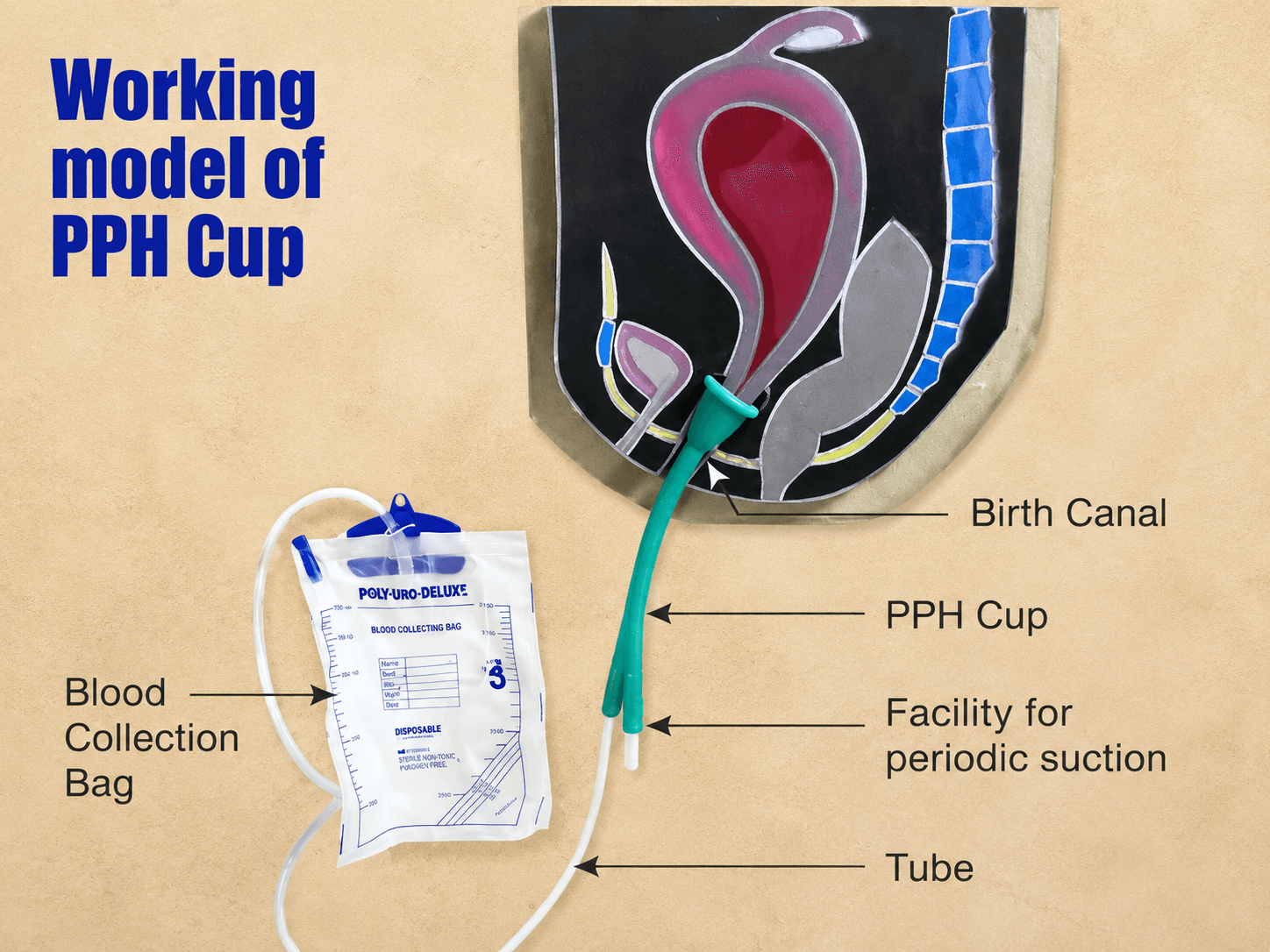
How It Works
Blood flows from the cup to the collection bag.
The cup receives postpartum blood loss, directs it through the stem and tubing, and delivers it into a graduated bag. The output is a measured volume that can be tracked during the period when clinical signs may lag behind actual blood loss.
Adoption And Outcomes
Used across India with clinical-use evidence behind the device story.
The archive records hospital adoption, ethics-reviewed clinical study material, safety/toxicity testing, and obstetric feedback. The key claim is direct: earlier measured recognition during the golden hour reduces missed PPH escalation.
49+
hospitals across India
Documented field adoption for obstetric blood-loss monitoring workflows.
95%+
PPH mortality reduction
Associated with 95% reduction in PPH-related maternal mortality in the study setting.
300
observational-study cases
Clinical-study record from Government Medical College, Akola.
100%
timely alarm reporting
Study summary reported timely alarms and accurate post-delivery blood-loss measurement.
Product Design
Simple to understand, fast to place, and built for real obstetric workflows.
The PPH Cup is a medical device designed to be simple for an obstetric team to understand and use in a fast-paced operating or delivery-room workflow. Its form avoids a complicated setup: the soft silicone cup captures postpartum blood loss, the stem provides a direct transfer path away from the care field, and the outlet connects to a graduated collection bag for quantitative monitoring.
The design is centered on minimal handling. Instead of asking clinicians to estimate soaked materials or visually judge pooled blood, the device channels blood into a dedicated measurement pathway while allowing the team to continue standard postpartum assessment and treatment.
The cup geometry, silicone material concept, outlet routing, and collection-bag interface are meant to make the device feel familiar in clinical use: easy to inspect, easy to connect, and focused on delivering a clearer volume signal during the immediate postpartum window.
Contact And Inquiry